LEADER IN THE NEUROTECH SPOTLIGHT: HADAR LEVY, CHIEF EXECUTIVE OFFICER, BRAINSWAY
ABOUT LIZ MOYLES – HEAD OF NEUROTECH, CRUXX, AUTHOR
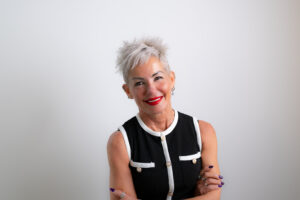
Liz Moyles is a self-described frustrated neurosurgeon. A lengthy hospital stay in her teenage years left her with PTSD and a fear of hospitals and blood, rerouting her career path entirely at 18.
Medicine was the plan. Biochemistry became the reality. But life in a lab was not where she belonged. What never left her was her fascination with the brain and the people building in the space.
Today, as Head of Neurotech at Cruxx, she works with start-ups and scale-ups across the US, Europe and beyond to help them attract the talent and capital required to build.
Her aim is simple: to give CEOs and leadership teams their time back to operate at a strategic level, not get pulled into day-to-day execution.
Fundraising, clinical trials, and regulatory work already stretch teams thin. Hiring sits on top of all of it.
When it goes wrong or moves too slowly, the consequences are immediate. It can mean missing funding, delaying submissions, slipping milestones, or losing people through overload.
Liz leads global executive searches for VCs and neurotech companies, placing C-suite and board-level leaders and building out senior teams across the US, Europe and beyond.
Embedded in the neurotech ecosystem, she speaks regularly with founders, operators, KOLs and investors, giving her a clear view of where the field is heading and what it takes to succeed in a start-up. That perspective shapes how she approaches hiring.
In start-ups, every hire matters, and attracting the best is non-negotiable. But they are rarely looking. Busy building elsewhere and often unaware of what you’re doing.
Finding them is one challenge. Getting them to engage is another.
But while you and your hiring managers are trying to find these people, the clock is running. FDA submissions, fundraising rounds, clinical trials.
Everything that cannot wait is …………waiting.
Reach out to Liz. That person is out there. She knows the space and where to find the people.
They just don’t know you exist. Yet!
_____________________________________________________________
YOU DON’T NEED TO BE THE SMARTEST PERSON IN THE ROOM
“If there is one more patient out there whose life we can change, then it is worth climbing the highest mountain to reach them.” After twelve years at BrainsWay, Hadar Levy says he is not becoming less motivated. He is becoming more impatient.
Hadar Levy is the CEO of Brainsway. We recently sat down whilst he was in Thailand to discuss the journey he has taken from a kibbutz to becoming CEO and the reason why Brainsway and the people it supports matter so much to him and the team.
This is a hugely valuable read for CEOs and founders in the neurotech space.
Hadar speaks about not being the smartest person in the room, and why if he was, it would mean he had made some bad hiring decisions. He also shares mistakes he has made and the lessons learned along the way. His view- “the first time is learning, the second is ‘a donation you make.'”
He explainsthe moments that real make him feel alive specially when he wants nothing more than to bury his head in his hands, how the FDA nod is little more than the starting line, and the reason he and Brainsway have invested in Neurolief and Sound Mind Behavioural.
Read on to learn about: the patients behind more than 8.5 million Deep TMS treatment sessions, why 20 treatment days becoming six matters, the loneliness of being CEO, reimbursement, how far non-invasive neurostimulation could ultimately go AND the song that will get Hadar on the dancefloor!.
Hadar spoke about not being the smartest person in the room, and why if he was, it would mean he had made some bad hiring decisions. He also shared many mistakes he has made and the lessons learned along the way. His view- the first time is learning, the second is ‘a donation you make.’

Hadar Levy, Chief Executive Officer, BrainsWay
Liz: Hadar, how did you go from growing up on a kibbutz to eventually finding your way into healthcare, technology and BrainsWay?
Hadar: I think the kibbutz shaped me more than I understood at the time.
You worked. Everyone worked. And nobody was particularly interested in your title or whether a job was beneath you. If something needed to be done, you did it.
But the bigger lesson was about community. You understood very early that you were part of something larger than yourself. You could be incredibly talented individually, but if the group didn’t work together, you weren’t going very far.
I still carry that with me. As CEO, I don’t need to be the smartest person in the room, and frankly, if I am, I’ve probably hired the wrong people. My job is to bring great people together, give them a common purpose, and help them accomplish something none of us could accomplish alone.
My career wasn’t planned. I certainly wasn’t sitting on the kibbutz thinking, ‘One day I’ll run a Nasdaq-listed neurotechnology company.’ But looking backwards, there is a thread: work hard, stay curious, surround yourself with good people, and try to do something that matters
I have always been drawn to the intersection of healthcare and technology, particularly where innovation can solve meaningful human problems. Healthcare is unique because when you get it right, the impact isn’t abstract , you can genuinely change someone’s life.
Liz: You have said previously that you have a habit of “working where there is no box, rather than outside it”. What does that mean, and where did the habit come from?
Hadar: I have never been particularly interested in accepting the boundaries of an industry simply because they already exist.
People often talk about “thinking outside the box.” But that still assumes there is a box: a set of rules that defines what is possible.
I prefer to start with the problem we are trying to solve and ask: If we were starting from zero, what would we build?
That mindset is particularly important in healthcare. If you begin with the existing system, you tend to make incremental improvements to the existing system. If you begin with the patient, sometimes you arrive at a completely different answer.
That is very much the story of BrainsWay. We didn’t ask how to build another TMS company. We asked how we could make interventional psychiatry more effective, more accessible and ultimately scalable.
And today, that question is taking us well beyond the traditional boundaries of TMS.
Liz: You have now spent twelve years at BrainsWay, having begun as CFO. What did you learn when you moved into the CEO chair that you had not anticipated as CFO?
Hadar: As CFO, you learn to see the company through numbers. As CEO, you learn that the numbers are the last chapter of a story that was written much earlier, through decisions about people, culture, priorities, investment, and sometimes courage. That was probably the biggest shift for me.
As CEO, you have to spend much more of your time looking through the windshield rather than the rear-view mirror. You have to ask: “Where are we going? What could this company become? What decisions do we need to make today to create that future two or three years from now?”
You make some of the most important decisions when the information is incomplete, when several paths look reasonable, and when the outcome won’t be known for years. That is where I learned something important about leadership: Leadership is not having certainty. Leadership is creating clarity in the absence of certainty.
Your team doesn’t expect you to predict the future perfectly. But they do need to know where you are going, why you believe in that direction, and that when the road becomes difficult, you will still be there leading from the front.
And yes, there is a loneliness to being CEO that I didn’t fully appreciate as CFO. There are decisions where you can listen to everyone, your management team, your board, your advisors, and still, at the end of the day, the decision has to become yours. I’ve learned to be comfortable with that.
Because leadership is not about avoiding the weight of responsibility. It is about being willing to carry it so that the organization can keep moving forward.
But I believe the biggest lesson has been about people. As CEO, I’ve come to understand that the most valuable capital in any company is human capital: the quality of the people you bring together, the culture you create between them, and whether they believe deeply enough in the mission to accomplish things that individually none of them could accomplish.
That connects back to something I learned growing up on a kibbutz. The individual can be talented. But the group is what creates something enduring.
The numbers tell you where a company has been. People, culture and courage determine where it can go. I saw that firsthand at BrainsWay. We had extraordinary technology, but we needed to build a stronger business around it. Over the last few years, we changed our commercial execution, increased the recurring nature of the business, created greater operating discipline, and demonstrated that growth and profitability can go together. That transformation reinforced something I believe deeply: great technology creates potential; great execution turns potential into a company. And I think that is ultimately the difference between being a CFO and being a CEO that has stayed with me most.
Liz: In your words, what is the role of a CEO?
Hadar: I think a CEO has 3 fundamental responsibilities.
First, create clarity. People need to understand where we are going and why.
Second, allocate resources and attention. Every company has more opportunities than it has time, people or capital. Strategy is ultimately deciding what not to do.
Third, build belief that an ambitious future is possible and that the organization is capable of reaching it.
I often say: you can do anything, but you cannot do everything.
A CEO’s job is not to create the longest list of opportunities.
It is to identify the few opportunities that can truly change the company, and have the courage to concentrate behind them.
Liz: Before we turn to BrainsWay, what advice would you give anyone preparing to move into that role?
Hadar: Prepare to have more responsibility and less certainty. Listen more than you speak, particularly at the beginning. Build a small group of people around you who are willing to tell you what you don’t want to hear.
And understand that your behavior becomes amplified…If you’re anxious, the organization becomes anxious. If you tolerate mediocrity, mediocrity spreads. If you’re intellectually honest about problems, people learn that problems can be discussed rather than hidden.
Most importantly, don’t try to become somebody else’s version of a CEO.
Know what you stand for, know where you want to take the company, and build a leadership style that is authentically yours.
20 DAYS BECOMES 6
Liz: For someone who does not know BrainsWay, what does Deep TMS actually do, who are the patients and clinicians you work with, and where does SWIFT fit?
Hadar: Simply put, BrainsWay helps people with serious mental health conditions when traditional treatments may not have been enough.
Our Deep TMS technology uses magnetic pulses to stimulate areas and networks in the brain associated with mental health conditions, without surgery, without implants, and while the patient is awake.
A patient comes into a clinic, sits in a chair, puts on our specially designed helmet, receives treatment, and then can continue with their day.
Today, our Deep TMS platform has four FDA-cleared indications, and more than 8.5 million treatment sessions have been delivered with close to 2,000 treatment centers.
One of the innovations I’m particularly excited about is SWIFT, our accelerated Deep TMS treatment protocol.
And the easiest way to understand why SWIFT matters is through one number: 20 days becomes 6 days.
With the standard protocol, the acute phase of treatment is delivered over 20 treatment days. With SWIFT, that acute phase can be delivered in just six treatment days, before maintenance.
Think about that from the patient’s perspective.
Someone struggling with depression may already be finding it difficult to work, care for their family, or simply manage everyday life. Asking that person to come to a clinic repeatedly over several weeks can itself become a barrier to treatment.
SWIFT is about reducing that burden.
Fewer treatment days.
Less disruption to everyday life.
And an accelerated path to potential benefit.
But it is equally important for the clinician.
If you can treat patients in fewer days, you can potentially treat more patients using the same chair and the same clinic infrastructure.
So SWIFT addresses one of the biggest challenges in mental healthcare: access.
It isn’t enough to develop an effective technology. We also have to ask: How do we make it easier for patients to receive it, and easier for clinicians to deliver it at scale?
That thinking also explains where BrainsWay is going next.
We are building a global platform for interventional psychiatry.
Deep TMS is the foundation. SWIFT makes that foundation more scalable. And around it we are building new indications, home therapy, AI and data capabilities, clinic partnerships and international expansion.
Ultimately, our mission is very simple:
Give patients more options, reduce the barriers between patients and treatment, and make advanced mental healthcare accessible to millions more people.

BrainsWay Deep TMS system.
Liz: What does sitting in the Deep TMS chair actually feel like?
Hadar: I think many patients are surprised by how simple and non-invasive the experience actually is.
You walk into the clinic, sit in a treatment chair, and a specially designed helmet containing our Deep TMS technology is positioned on your head.
There is no surgery, no implant, and no anesthesia. You remain awake and alert throughout the treatment.
During treatment, magnetic pulses stimulate targeted areas and networks in the brain. Patients typically feel a tapping sensation on the scalp and hear the clicking sound of the magnetic pulses.
And when the session is finished, you get up from the chair and can generally return to your normal daily activities.
I think that simplicity is incredibly important.
When people hear the words “brain stimulation,” it can sound intimidating. But the actual experience is very different from what many people imagine.
And that connects to a much bigger ambition we have at BrainsWay.
We want brain stimulation to stop feeling like an extraordinary treatment and become an ordinary part of mental healthcare.
My hope is that one day, when a physician tells a patient, “I think we should consider Deep TMS,” it feels no more unusual or frightening than discussing any other established treatment option.
Because ultimately, the technology may be sophisticated.
But the patient experience should be simple and they like it.
THE EMOTION BEHIND THE PATIENT SITTING IN THE CHAIR

A Deep TMS treatment session.
Liz: What path has a patient typically taken before reaching Deep TMS? How do they usually feel when they arrive?
Hadar: By the time many patients reach Deep TMS, they have often already been on a long and frustrating journey.
They may have tried one medication, then another. They may have changed doses, dealt with side effects, tried psychotherapy, and spent months or even years searching for something that works for them.
So I don’t think most patients arrive simply “excited.” I think a better word is hopeful, but tired.
And sometimes they are understandably skeptical. If you have tried several treatments without getting the result you hoped for, you learn to protect yourself from disappointment.
That is something we should never forget when we talk about innovation in healthcare. Behind every new technology or FDA clearance is a person who may have been struggling for a very long time.
A treatment doesn’t only need to work. We should also work to make it easier for people to access, easier to complete, and easier to fit into real life.
So when I think about the patient arriving for treatment, I don’t expect them to arrive believing that we have all the answers.
What I hope is that they arrive knowing something much simpler: Their journey may have been long, but they may still have options worth exploring with their physician.
And our responsibility at BrainsWay is to keep expanding those options.
Liz: Of all the patients treated, are there any stories or moments that have stayed with you most?
Hadar: There are many, and I have to be careful because these are deeply personal stories.
But what stays with me most is actually not one specific patient. It is a pattern I have heard again and again.
Patients often come to Deep TMS after a very long journey. They have tried different medications, different therapies, sometimes for years. By the time they reach us, some have almost forgotten what it feels like to imagine life differently.
And then you hear about the small moments.
Someone goes back to work.
Someone starts spending time with friends again.
A parent becomes more present with their children.
Someone says, “I feel like myself again.”
Those words stay with you.
Because when we run a company, we naturally talk about FDA clearances, clinical data, reimbursement, systems installed and growth.
Those things are important. They are how we measure progress.
But patients don’t experience healthcare in percentages. They experience it in moments.
Can I get out of bed in the morning?
Can I go back to work?
Can I enjoy dinner with my family?
Can I imagine a future again?
More than 8.5 million Deep TMS treatment sessions have now been delivered. That’s a number I’m incredibly proud of.
But behind that number are individual human beings and families.
And that is what keeps the mission very real for me.
In healthcare, the numbers tell you how far you’ve reached. The individual stories remind you why you started.
Liz: Where did the idea for SWIFT come from, and how does the H-coil differ from the traditional figure-8 coil?
Hadar: The idea behind SWIFT came from asking a very simple question: If we know Deep TMS can help patients, how can we make the treatment easier to receive? Because efficacy is only part of the equation.
So we challenged ourselves to rethink the treatment schedule.
Could we deliver treatment in a more intensive, accelerated way while maintaining the clinical and safety standards required to bring it to patients?
That work ultimately led to SWIFT, the only FDA-cleared six-day accelerated Deep TMS protocol. The acute phase can now be delivered over six treatment days before maintenance.
And that brings us to the technology itself.
Traditional TMS systems generally use what is called a figure-8 coil, which delivers relatively focal and superficial stimulation.
Our proprietary H-coil was designed differently. Deep TMS stimulates more deeply and broadly and is designed to reduce sensitivity to targeting errors compared with traditional figure-8 TMS. That technological platform has enabled us to build clinical evidence across multiple conditions; today, Deep TMS is the only platform of its kind cleared across four FDA indications.
But I would separate these two innovations.
The H-coil is the technological foundation of Deep TMS. SWIFT is an innovation in how we deliver treatment on that foundation.

BrainsWay H1 coil.
SOMETIMES YOU HAVE TO BUILD THE ROAD
Liz: What indications do you currently have clearance for, and what did it mean to take OCD through the De Novo pathway when there was no predicate device?
Hadar: Today, BrainsWay has 4 FDA-cleared indications, which makes us the only Deep TMS platform cleared across four indications and 12 approved indications with CE mark.
We are continuing to look at new indications where we believe our technology can address significant unmet clinical need.
But OCD is a particularly important part of our story.
When we pursued FDA clearance for OCD, there was no predicate device. We couldn’t simply say, “Here is another version of something that already exists.”
We had to go through the De Novo pathway.
That meant helping demonstrate not only that our technology worked, but effectively helping establish an entirely new regulatory category.
And I think that captures something fundamental about BrainsWay.
It is relatively easy to follow a road when somebody else has already built it. It is much harder to build the road yourself.
There were certainly easier paths we could have taken. But OCD represented a tremendous unmet need, and we believed the science justified pursuing it.
When the FDA granted the clearance, it was much more meaningful to me than simply adding another indication to our label.
We had opened a door that had not existed before.
And once that door exists, the impact can extend beyond BrainsWay. It helps establish neuromodulation as a treatment category, encourages further research and innovation, and ultimately creates more possibilities for patients.
That’s also how I think about our pipeline today.
We don’t want to collect indications simply to make the list longer.
We want to pursue conditions where there is meaningful unmet need, where the science supports us, and where our technology has the potential to make a real difference.
Every new indication can also expand the opportunity built around the same Deep TMS platform. That ability to build new clinical applications on top of an established technology, installed base and commercial infrastructure is an important part of our strategy.
For me, innovation is not about being first for the sake of being first. It is about being willing to go first when patients need someone to build the road.

BrainsWay system with H1, H7 and H4 coils.
DON’T CONFUSE A GREAT PRODUCT WITH A MARKET
Liz: You have had a run of coverage decisions go your way. What does one of those decisions actually mean to you, and how much has the market shifted from you pushing to the field pulling?
Hadar: Every coverage decision is exciting, but probably not for the reason people might expect.
For me, FDA clearance proves that you have created a treatment. Reimbursement helps turn that treatment into access.
You can have great technology, strong clinical evidence and physicians who want to use it, but if patients cannot afford to receive the treatment, you haven’t completed the journey.
So when a major payer expands coverage, I don’t just see another reimbursement policy.
I see another barrier coming down between a patient and treatment.
Today, more than 300 million covered lives have access to Deep TMS reimbursement, and we are seeing coverage continue to expand across Medicare and commercial payers.
As to whether we’re pushing or the market is pulling, I think the answer has changed over time.
In the early years, we had to push very hard.
We had to educate. We had to generate evidence. We had to explain the technology to physicians, payers and health systems. We had to help establish the clinical and economic case for a category that was still relatively new.
Today, increasingly, we are seeing the field pull.
Physicians know TMS. Patients are asking about it. More clinics are adding interventional psychiatry. Health systems are building capacity. New provider sites are growing, and reimbursement is expanding.
That is an important transition.
A market changes when you stop having to explain why the category should exist and start having conversations about how quickly it can scale.
I believe that’s where interventional psychiatry is beginning to move.
But I don’t think that means our job becomes easier. In some ways, it becomes bigger.
Because once the market starts pulling, our responsibility shifts from proving the concept to making sure there is enough access, enough capacity, enough awareness and enough trained providers to meet that demand.
And there is still enormous work ahead. Despite the progress in reimbursement and adoption, we estimate penetration today at less than 2% of the opportunity we see. That is why, despite everything we have achieved more than 8.5 million treatment sessions and close to 2,000 treatment centers, I genuinely believe we are still at the beginning. The opportunity ahead of us is dramatically larger than what we have built so far.
So I think about reimbursement very simply: Innovation creates possibility. Evidence creates credibility. Reimbursement creates access. And access is what ultimately allows innovation to reach patients at scale.
Liz: Thirteen years after the first depression clearance, what have you learned about actually building access? What would you tell another CEO trying to build a market around a new technology?
Hadar: I wish there were one barrier, because then you could solve it and move on.
The reality in healthcare is that access is a chain – and the patient only gets treated if every link in that chain works.
You need strong clinical evidence.
You need regulatory clearance.
You need reimbursement.
You need clinicians who understand and believe in the treatment.
You need clinics with the capacity to deliver it.
And finally, patients need to know the option exists.
If any one of those links is missing, access breaks.
That has probably been one of my biggest lessons from the last thirteen years.
FDA clearance is not the finish line. In many ways, it is the starting line.
When we first received clearance for depression, we had a technology and clinical evidence. But then you have to build an entire ecosystem around that technology.
Then you have to build the ecosystem around it:
Work with payers.
Educate physicians.
Build reimbursement.
Help providers understand the economics of offering the treatment.
Increase treatment capacity.
Create awareness so that patients know there may be another option to discuss with their doctor.
But here is the number that keeps me focused: We estimate that penetration is still below 2%.
So today I don’t think the biggest challenge is simply reimbursement.
Coverage has expanded significantly. The next challenge is turning coverage into utilization.
That means:
Making sure physicians think about interventional psychiatry earlier.
Building more treatment capacity.
Making treatment easier for providers to deliver.
Educating patients so they know these options exist.
The lesson I would give to healthcare founders and CEOs is simple: Don’t confuse having a great product with having built a market.

BrainsWay Deep TMS treatment interface and H1 coil.
A great technology can get you through the door.
But building a market takes years.
You have to think about the entire journey between your innovation and the patient:
Who pays for it?
Who delivers it?
Does the provider make economic sense offering it?
Does the patient know about it?
Is it easy enough to access?
And you have to work on all of those things at the same time.
There is another lesson I have learned: healthcare rewards persistence.
Thirteen years can sound like a long time. But when you are trying to change a standard of care, you’re changing behavior across physicians, payers, health systems and patients. That doesn’t happen overnight.
Liz: You have invested in both Neurolief and Sound Minds Behavioral. How do those investments build on the core business, and what was it about Neurolief’s at-home model that impressed you?
Hadar: On Sound Minds Behavioral, the investment builds directly on BrainsWay’s core business. We are not trying to become a clinic operator. We are partnering with high-quality, growth-oriented behavioral health providers and providing growth capital that can help them expand interventional psychiatry and patient access. At the same time, we remain focused on what we do best: advancing our technology and supporting customers. Sound Minds therefore strengthens the ecosystem in which Deep TMS is delivered and helps broaden awareness and access to advanced mental-health treatments.
Neurolief is complementary in a different dimension. Deep TMS is a powerful in-clinic therapy, but not every patient can readily get to a treatment center. Neurolief gives us an opportunity to extend neurostimulation beyond the walls of the clinic. Its Proliv Rx system is an at-home therapy for patients with MDD who have had an inadequate response to antidepressant medication, and it received FDA PMA approval in 2026. That potentially expands our addressable market while creating a continuum between clinic-based and home-based neurostimulation rather than forcing us to choose between the two.
What impressed us about Neurolief was precisely that the at-home model was backed by serious clinical and regulatory work. We weren’t attracted simply to the convenience of a wearable device. We saw a differentiated, non-invasive, multi-channel neuromodulation platform with positive clinical data and a pathway for treatment to remain connected to mental-health professionals while reaching patients outside traditional settings. The FDA approval subsequently provided an important validation of that thesis.
HOW FAR CAN NON-INVASIVE NEUROSTIMULATION GO?
Liz: What is next for BrainsWay? What can we expect from the work in Alzheimer’s, Parkinson’s, stroke and other conditions?
Hadar: The next chapter for BrainsWay is about taking the platform we have built in psychiatry and asking a much bigger question: how broadly can noninvasive neurostimulation change the treatment of brain disorders?
Today, we have four FDA-cleared indications, an installed base of more than 1,950 systems, and millions of treatments behind us. But we do not see four indications as the end point. Our roadmap explicitly includes additional indications and an expansion beyond psychiatry into neurology.
A particularly important part of that work is Deep TMS 360, our investigational rotational-field technology. Rather than stimulating predominantly along one orientation, it uses two perpendicular coils with a very short time lag to create a rotating electrical field. The goal is to activate a broader population of neurons, which we believe may be especially relevant in older patients and neurodegenerative diseases where neuroplasticity is reduced. We are already studying the technology in alcohol-use disorder and post-stroke rehabilitation, and we have identified feasibility work in dementia, Alzheimer’s disease and Parkinson’s disease as part of the clinical plan. Importantly, Deep TMS 360 remains investigational and is not commercially available.
So on Alzheimer’s and Parkinson’s, I would be disciplined about expectations. We are excited, but we are still at the clinical-development stage. These are extraordinarily difficult diseases, and we are not going to promise an outcome before the science earns it. The opportunity is compelling precisely because current therapeutic options remain limited and because our technology may allow us to stimulate neural networks in a fundamentally different way. The next step is generating the clinical evidence to determine whether that technological advantage translates into meaningful benefit for patients.
At the same time, the pipeline is broader than neurology. PTSD has been an important near-term program, and alcohol-use disorder is under active study. Our internal 2026 objectives identify the PTSD FDA submission as completed, the AUD study as ongoing, and continued advancement of neurology indications as part of the clinical agenda.
And there is another dimension to “what’s next.” We are evolving from a Deep TMS device company toward a broader brain-health platform. I don’t believe BrainsWay’s future is simply to become a larger TMS company. Our ambition is to build one of the world’s leading neurotechnology platforms for brain health, connecting treatment in the clinic, treatment at home, new indications, and ultimately data and AI that can help make treatment more personalized.

BrainsWay Deep TMS treatment systems.
So I would characterize the future this way:
First, make the treatments we already have faster, easier to access and more widely available.
Second, continue expanding the number of psychiatric conditions we can treat.
Third, and potentially most transformative, take the science of noninvasive neurostimulation into major neurological diseases such as Alzheimer’s, Parkinson’s and stroke.
We have already demonstrated that one technology platform can move from depression into OCD, smoking addiction and additional applications. The ambition now is much larger: to see whether we can build a platform that addresses not simply mental illness, but some of the most consequential disorders of the brain.
THE FIRST TIME IS TUITION
Liz: You have said that you can do anything, but you cannot do everything. You have also described failure as a learning tool. How are those two ideas connected for you?
Hadar: The two ideas are connected, and both become more obvious the longer you are in leadership.
“You can do anything, but you cannot do everything.” When you’re young, you think the challenge is getting opportunities. Later you discover the real challenge is surviving all the opportunities you said yes to.
Success creates choices. There are always more markets to enter, products to develop, partnerships to pursue, meetings to attend. And somehow every meeting is described as “only 30 minutes.” I have learned to be very suspicious of those 30 minutes.
The discipline is deciding what not to do. At BrainsWay, we have a platform with potential across many brain disorders. That is exciting, but potential can also be dangerous because suddenly everything looks interesting. We have to ask: where is the science strongest, where is the unmet need greatest, and where can we genuinely make a difference? Then focus relentlessly on those priorities.
The second principle is failure is a learning tool. The only guaranteed way not to fail is to do absolutely nothing – which, unfortunately, is not a particularly compelling business strategy.
If you are ambitious and moving quickly, you will make mistakes. I certainly have. The important distinction is between a good failure and a stupid failure. A good failure is: we made a thoughtful decision, took a calculated risk, it didn’t work, and we learned something valuable. A stupid failure is making the same mistake twice. The first time is tuition. The second time, you’re apparently making a donation.
“The first time is tuition. The second time, you’re apparently making a donation.”
I want people around me who are willing to make decisions. If you create a culture where nobody is allowed to fail, eventually nobody does anything without six meetings, three committees and an email confirming who approved it.
So my philosophy is fairly simple: do fewer things, do the important things extremely well, take intelligent risks, and when something fails, learn quickly and move forward.
And preferably, don’t schedule another 30-minute meeting to discuss it.
Liz: Looking back from military service to running a listed company, what have you learned about leading people – particularly the lessons you learned the hard way?
Hadar: A few lessons have stayed with me from military service all the way to running a public company. The environment is obviously very different, but people are still people.
Your job is to surround yourself with great people, give them clarity about where you are going and why, and then give them enough space to surprise you. In the military, you learn very quickly that a plan created at headquarters rarely survives reality exactly as written. Business is not so different, although fortunately, PowerPoint is usually the most dangerous weapon in the room.
The second lesson is people need purpose, not just instructions. If people understand the mission and believe in it, you don’t have to tell them how to make every decision. At BrainsWay, our mission, improving health and transforming lives, isn’t something I want sitting on a wall. I want someone making a difficult decision on a Tuesday afternoon to understand what we’re trying to accomplish and use that as their compass.
The lessons I learned the hard way are probably more valuable.
One is that waiting too long on people decisions almost never makes them easier. Leaders naturally want to give people another opportunity, another quarter, another chance. Sometimes that is absolutely right. But when you know that someone is no longer right for a role, delaying the decision is usually unfair to that person, unfair to the team and unfair to the organization. I’ve learned to distinguish patience from avoidance.
I’ve also learned that what a CEO says is amplified far more than you realize. You can walk into a meeting, casually ask, “Why don’t we do X?” and walk out five minutes later having completely forgotten about it. Two weeks later, six people have formed a task force around X. So you learn that curiosity from the CEO can accidentally sound like strategy.
And perhaps the biggest lesson is you cannot outsource accountability. You should delegate authority – otherwise you become the bottleneck- but ultimately the responsibility stays with you. When something goes well, there are usually many people who deserve the credit. When something goes badly, looking around for someone to blame is not leadership.
Military service taught me that leadership is ultimately a privilege because people are trusting you with something valuable. In business, they’re trusting you with their careers, their time and their ambitions. In healthcare, there is another layer: patients are ultimately depending on the decisions we make.
That creates a very simple standard for me: be clear about the mission, surround yourself with people better than you, give them room to lead, make the difficult decisions when they need to be made, and when things go wrong, stand in front rather than looking behind you.
DON’T CONFUSE A BAD MOMENT WITH A BAD STORY
Liz: Has there ever been a time in the last twelve years when you went home and wanted to bury your head in your hands? How did you manage it, and what would you tell another CEO who finds themselves there?
Hadar: Yes. More than once. And I think any CEO who tells you otherwise either has an extraordinary memory, or a very good communications team.
There have been moments over the last twelve years when something we believed would happen didn’t happen: a clinical result, a regulatory or reimbursement development, a commercial target, a key person, or simply a plan that looked excellent on paper and met reality. In healthcare, those moments can be particularly difficult because behind the numbers are patients, employees, investors and families who have put their trust in you.
What I’ve learned is that you are allowed to have the head-in-your-hands moment. You just can’t stay there very long.
My approach is to separate three things:
First, what actually happened? Strip away the emotion and understand the facts.
Second, what is within our control now? You cannot change yesterday, but you can decide what happens next.
Third, what can we learn? Because a painful experience that changes nothing is just pain.
There’s also something about being CEO that you don’t fully appreciate until you’re sitting in the chair. Your emotions travel through the organization. If you panic, people panic. That doesn’t mean pretending everything is fine. People can smell fake confidence from a mile away. It means being transparent about the problem while demonstrating confidence in our ability to deal with it.
And I have learned not to make the biggest decisions at the lowest emotional point. Go home. Be frustrated. Sleep. Exercise. Talk to the two or three people who will tell you the truth rather than what you want to hear. Then come back and make the decision.
My advice to someone facing one of those days would be: don’t confuse a bad moment with a bad story. When you’re in the middle of something difficult, it feels enormous. A year later, you often discover it was a chapter, and sometimes it was the chapter that forced you to become better.
“Don’t confuse a bad moment with a bad story.”
Leadership isn’t proving that you never put your head in your hands. It’s knowing when to lift it back up, walk through the door the next morning, and help everyone else see the way forward.
SOMEWHERE THERE IS STILL ANOTHER PATIENT WAITING
Liz: What is it about this that still has you so fired up after twelve years?
Hadar: Over the years, I’ve received hundreds of thank-you letters from patients and their families. I keep them because they remind me that behind everything we talk about, FDA approvals, growth, technology, quarterly results, there is a human being whose life can change because of what we do.
Some of those letters stay with you. A patient who can go back to work. A parent who gets their son or daughter back. A family that feels they have someone they love back in their lives. Those are not numbers on a spreadsheet.
And my feeling is very simple: if there is one more patient out there whose life we can change, then it is worth climbing the highest mountain to reach them.
There are days when that mountain feels particularly high. Regulatory hurdles, clinical trials, reimbursement, setbacks, you name it. But then another letter arrives, and suddenly you remember exactly why you’re climbing.
That is our why. We are not developing technology simply because the science is fascinating. We are doing it because there are still people suffering who need better options.
After twelve years, that doesn’t make me less motivated. It makes me more impatient. Because somewhere there is still another patient waiting
Liz: Being a CEO is not an easy job. What do you do to switch off?
Hadar: I’m not sure a CEO ever completely switches off. If someone has figured out how, I’d like their phone number.
For me, swimming is probably the closest I get. When I’m in the water, there are no emails, no calls, no meetings, just the next stroke and the next breath. It is also remarkably difficult for anyone to reach you when you’re underwater.
And then there is family, which is the best way to regain perspective. At work you may be the CEO. You walk through the front door and very quickly discover that nobody is particularly impressed by your title.
I’ve learned that switching off isn’t necessarily about stopping thinking. It’s about creating enough space to recharge and come back with a clearer mind.
Sometimes the best thing you can do for the business is simply get out of the business for an hour.
THERE MAY STILL BE ANOTHER DOOR
Liz: In twenty years, when someone with treatment-resistant depression walks into a clinic, what do you want to be different about what happens next?
Hadar: In twenty years, I hope we don’t even use the phrase “treatment-resistant depression” in the same way we do today.
What I want to change is the journey. Today, too many patients spend years moving from one medication to another, waiting six or eight weeks, discovering it hasn’t worked, trying something else, and slowly losing hope along the way. We should be able to do much better than trial and error.
I want a patient to walk into a clinic and have the physician understand much more precisely what is happening in that individual brain and which treatment is most likely to work for that individual person. That could involve biomarkers, imaging, genetics, clinical data and AI. And then I want effective treatments, medication, neurostimulation or combinations, to be available much earlier rather than being reserved for the end of the road.
I also hope treatment becomes dramatically easier. We’ve already moved Deep TMS from a four-week course toward accelerated protocols that can be delivered in six days. Twenty years from now, I would like today’s treatment burden to look almost primitive.
But ultimately, the biggest difference I want is emotional.
I don’t want someone walking into that clinic thinking, “I’ve tried everything. What happens if this doesn’t work?”
I want them walking in knowing, “There are several good options for me, and we’re going to find the right one.”
They should be what patients expect.
Liz: Someone reading this may have tried four medications and been told they have run out of options before moving to more invasive methods. What would you say to them?
Hadar: I would say one thing first: please don’t assume that running out of medications means you have run out of options.
For too long, mental-health treatment has followed a fairly linear path: try one medication, then another, then another. And I think we should challenge that paradigm. The question should not only be what we offer a patient after four medications have failed. We should also ask why that patient had to fail four medications before being offered another evidence-based treatment option. My hope is that neurostimulation increasingly moves earlier in the treatment journey.
There are now non-invasive treatment options, including TMS, that work differently from medication and do not require surgery or an implanted device. Whether they are appropriate depends on the individual, and that is a conversation to have with a qualified clinician.
But if I were sitting across from someone who had tried four medications and was exhausted by the process, I would tell them: don’t give up because one pathway hasn’t worked. Ask what else is available. Ask about interventional psychiatry. Get another medical opinion if you need one.
So my message is simple: there may still be another door. Make sure you’ve explored it before someone tells you the hallway has ended. There may still be another door.
I DANCE WITH CONSIDERABLY LESS EVIDENCE
Liz: And finally, Hadar, purely for fun: what song gets you onto the dance floor?
Hadar: I’m a rock guy, Led Zeppelin will always get my attention. But put on Coldplay’s A Sky Full of Stars and I’m on the dance floor. I lead with confidence. I dance with considerably less evidence.

More to explore