LEADER IN THE NEUROTECH SPOTLIGHT: ANDREAS FORSLAND, CEO, COGNIXION
IT STARTED AS AN AAC PROJECT
Liz: Andreas, great to see you again and in one piece after your snowboarding trip. So let’s kick off. For anyone out there reading this, can you share what Cognixion has built so far and what you’re developing?
Andreas: Thanks Liz, it’s great to see you too. And yes, I survived the snowboarding trip. It was great to be out in deep snow on the slopes and enjoy the peace and fresh air. It gives me time to think and reset.
To answer your question, Cognixion is a neurotechnology and assistive technology company that I started back in 2014. We originally began with a very clear mission: to help people who have conditions that impact speech and motor function and to unlock communication and independence for them. We positioned ourselves early on in the Augmentative and Alternative Communication space, or AAC.
Over the last decade, the team has grown and we’ve worked across a wide range of communities, including people living with stroke, traumatic brain injury, ALS, cerebral palsy, multiple sclerosis, autism, and many other conditions. What we’ve learned through those relationships is that communication is the starting point, but it’s not the end goal. Independence requires broader interaction with the world.
In terms of what we’ve developed, we have an AAC product called Speakprose, which is available today on iOS. It’s used globally and supports multiple access methods, including switch access, touch, gesture control, and face and eye tracking using the iPhone and iPad depth cameras. It also integrates Alexa, so users can control smart home devices and access other assistant functions.
Importantly, Speakprose also gave us a decade of learning from tens of thousands of real users, young and old, with a wide range of human factors complexities, about what breaks, what causes fatigue, what’s too slow, and what feels natural in daily communication. Furthermore, the criticality of deeply personalizing the interface and application became painfully obvious and is the number one reason why so many people haven’t been able to access technology due to extreme usability requirements. That user insight directly informed how we designed Cognixion ONE.
AND THEN IT PROGRESSED
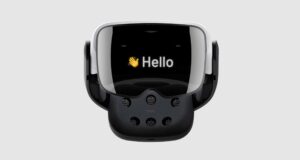
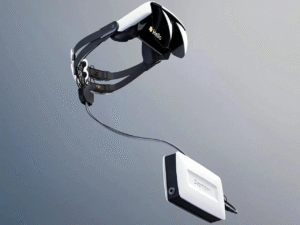
We saw another need which led to Cognixion ONE- our flagship wearable computing platform. It brings together augmented reality glasses with non-invasive brain sensing, along with head tracking and eye tracking, all in one integrated system that can be personalized to each user based on their unique needs and preferences. There is no such thing as a “silver bullet” sensor that can scale to everyone. Multimodal interaction is the best path.
Compared to what exists today, the idea is to eliminate the need for a mounted computer or bulky setup and instead give people a wireless wearable system that runs applications directly inside the glasses and can be controlled through a combination of brain, eye, and head inputs, requiring little to no muscle activity.
Eye tracking has been a major step forward for AAC, but it also has real-world limitations, including fatigue, calibration requirements, and sensitivity to lighting and user positioning. We wanted to build a multimodal system so users aren’t dependent on a single access method that may fail them on a given day. Non-invasive brain sensing becomes another input layer, not a replacement but an expansion.
We’ve also observed in public reports from Neuralink and JP Morgan’s recent BCI reports that although early patient testers gain additional agency from the implant, they are limited by applications that can interact with the sensor data. The participants also do not use the sensor continuously throughout the day, only during specific activities. This lack of continuous value creation further reduces the value of undergoing a major surgical procedure versus using a wearable solution.
Cognixion ONE has received FDA Breakthrough Device designation. It’s still in development and progressing through the regulatory process, with the long-term goal of becoming cleared and reimbursable so it can be covered by Medicare, Medicaid, and private insurance.
RESEARCH – BLACKROCK NEURO, APPLE, AMAZON WITH AXON-R
In parallel, we’ve also developed a research version of the platform called Axon-R, which is available now. Axon-R is designed for universities, clinicians, and researchers who want to explore assistive technology applications like AAC and wheelchair control, as well as clinical research use cases around rehabilitation, cognition, attention, and ophthalmology. There are over a dozen major US health systems that have purchased Axon-R and are using our BCI Studio™ software development kit with robust API support to rapidly prototype, test, and validate novel neurological diagnostics, therapies, remote monitoring, telehealth applications, and even hybrid implants plus Cognixion use cases for improving implantable BCI decoding derived from more natural immersive experiences.
Axon-R is also a strategic bridge for us. It allows us to deploy the core non-invasive BCI platform today in research and clinical environments, generate data, and build strategic ecosystem partnerships while Cognixion ONE continues progressing through the regulatory pathway.
For example, Cognixion has integrated our BCI technology with Amazon Alexa, Apple Vision Pro (currently in clinical trials), Pupil Labs, Blackrock Neurotech (an implantable BCI company), Intheon, and numerous common neurophysiology applications used by professionals in clinical and scientific research.
In short, we started with communication, but we’re building toward a scalable neurocomputing platform that in the near term can give people independence and open up new possibilities in clinical research and healthcare.
In the long term, from a technology perspective, we are in the era called Web 3.0, which is a time of convergent systems. We believe Cognixion is well positioned to become a fundamental part of the Web 3.0 infrastructure, unlocking future possibilities toward Web 4.0, when the built environment becomes more naturally in tune with our biology and our biology can interact with the built environment and the people and systems within it.
MY MOTHER’S PERSONAL JOURNEY
Liz: Thanks, Andreas. That is one great overview of the many plates you are spinning. It’s interesting to see how each one informs the others. I really love how Axon-R is also helping the wider research community.
I’d like to rewind for a moment. What originally led you to start Cognixion and what’s your background?
Andreas: My background is in design, product, and user experience. Before founding Cognixion, I was at Citrix, where I served as Senior Director of Brand Management for the apps portfolio and Senior Director of Global Creative, leading brand experience and design efforts within the SaaS division.
Prior to that, I was at Philips Electronics as a Senior Manager of Design within the Philips Design organization. There, I worked across global initiatives spanning healthcare, lighting, consumer electronics, and semiconductors. Earlier in my career, I worked as a design strategist with brands including Apple and IBM.
But what ultimately led me to start Cognixion was personal.
My mom developed pneumonia that progressed rapidly into septic shock. She was admitted to the ICU, intubated, and placed on life support. She recovered, thankfully, but during that period she was unable to speak and had almost no motor control. For all practical purposes, she was locked in, cognitively fully intact but without a reliable way to communicate.
That experience stayed with me. It showed me how devastating the communication barrier can be even when cognition is intact. That became the foundation for Cognixion: if we can unlock communication and agency for people whose speech and motor abilities are impaired, we can fundamentally change their quality of life.
SMALL AND MIGHTY
Liz: That was clearly life changing for you and I’m truly sorry that happened to your mother. The appreciation of how many others are affected clearly was significant. So you said Cognixion started as a project, but how big it I now and what kind of investors have chosen to back your journey?
Andreas: We’re a small but mighty team of about 25 people today, headquartered in Santa Barbara, with a presence in Toronto. We’ve raised just over $26M to date across several rounds.
Our largest early inflection point was a $12M seed round in 2021, led by Amy Kruse, a former DARPA BCI Program Manager turned GP of Prime Movers Lab -a significant institutional VC fund. Before joining venture investing, Amy served as a government civilian program manager at DARPA, where she created and oversaw the Agency’s first performance-oriented neuroscience programs. Amy and the institution believed in us from the start. They were visionary and courageous. The round also included participation from Northwell Health Ventures, Amazon Alexa Fund, and Volta Circle.
That money allowed us to move from being primarily software-focused into fully integrating hardware, non-invasive brain-computer interface technology, and augmented reality into a single platform.
More recently, we closed additional funding in 2025 and early 2026 to complete our regulatory work and commercialization efforts.
We’ve been intentional about partnering with investors who understand deep technology and long development cycles. Prime Movers Lab has been a key supporter and understands frontier science- they focus on breakthrough science and deep technology startups. The Amazon Alexa Fund invested because they see the intersection between AI assistants, smart environments, and accessibility. Northwell Health Ventures and Memorial Hermann Health System Ventures brought a healthcare system perspective, and the ALS Association’s ALS Accel brings tremendous value in community activation, market access, and patient access.
Having strategic, smart capital has influenced how we think about clinical validation, reimbursement, market access, patient access, and most importantly, driving quadruple aim outcomes at population scale.
Liz: I know how challenging it is to get that first injection if cash. In fact, how hard it is throughout the journey to success. Andreas, when you look back at the different stages of growth, were there specific funding moments that really changed the trajectory of the business? What did those inflection points unlock operationally?
Andreas: The 2021 seed round was a major turning point. It allowed us to expand the engineering team, invest deeply in the hardware stack, formalize our regulatory pathway, and bring in senior technical leadership, including our CTO.
Receiving FDA Breakthrough Device designation in 2023 was another important milestone. It enables an accelerated regulatory pathway, and it validated the clinical potential of the platform and strengthened conversations with both investors and healthcare stakeholders.
Launching Axon-R as a research platform has been another key step. It lets us generate real-world data and build ecosystem partnerships with some of the world’s leading neurological care centers across the country, while Cognixion ONE advances in parallel toward clearance and reimbursement readiness.
Liz: As you’ve brought investors on board, how have those conversations shaped decisions around regulatory strategy and commercialization timing?
Andreas: Investors have pushed us to be disciplined about sequencing. Building a reimbursable medical device takes time. Rather than wait for full clearance, we recognized that the platform had value today in research and clinical environments.
Axon-R creates early revenue, generates data, and builds credibility, while Cognixion ONE continues progressing through the regulatory process. It’s about balancing near-term deployment with long-term clinical ambition, without compromising safety or regulatory integrity.
We designed Axon-R to medical device safety and regulatory standards so that it can be used for research in virtually any environment and has received NSR (Non-Significant Risk) classification for most use cases being explored, including assisted reality applications. The platform is currently in multiple official clinical trials. Two active trials are our own. Liz – if you’re at a loose end, (which I know you never are), check it out – it’s on clinicaltrials.gov – search for “Cognixion.”
ACCOLADES
Liz: The approach and discipline is really well considered. That is evident. You’ve been working on this since 2014. When you look back over the last few years, what have been, for you, the defining milestones in Cognixion’s evolution?
Andreas: The last few years have really been about regulatory credibility, community activation, gathering deep insights and trade secret know-how. We’ve been building a strong IP portfolio, developing a strategic ecosystem of partnerships, and pushing for clinical validation. There have been some key moments of validation along the way.
Some of the key milestones include the Red Dot Luminary Award and Red Dot Best of the Best we received in 2021 for our augmented reality platform.
2023 was pivotal. We gained FDA Breakthrough Device designation for our integrated non-invasive BCI plus AR platform and completed CMS accreditation as a Durable Medical Equipment (DME) provider in the same year, positioning us for long-term reimbursement pathways.
In late 2024, we were named MedTech World Startup of the Year and received SXSW Innovation Award recognition.
2025 was defining. We entered into strategic integrations with Blackrock Neurotech, Pupil Labs, and Apple Vision Pro. We launched clinical trials focused on communication and computer control for late-stage ALS and other severe neurological conditions, including traumatic brain injury, stroke, and spinal cord injury. We also attracted strategic investments from ALS-focused organizations and leading health systems.
It was also a wonderful surprise for the team to be named on TIME’s Best Inventions of 2025 list and recognized as a Luminary, alongside Steve Wozniak, co-founder of Apple, by The Tech Interactive Museum in Silicon Valley. They even built a large interactive exhibit about us, enabling hundreds of thousands of children to learn about our work and get hands-on experience with Axon-R. Next time you’re here Liz, we’ll head down to Silicon Valley and visit it in downtown San Jose.
A NEW YORK ROAD TRIP – THE IMPOSSIBLE DREAM
Liz: Andreas, listening to that, it really tells the story of the shift from building to clinical validation and real-world application in the broader neurotech ecosystem. What’s been the most meaningful moment for you personally?
Andreas: You know, Liz, awards are great, don’t get me wrong. They bring marketing and media attention. But for us, it’s the user stories that make the difference. When times are hard, which they can be, it’s rereading the feedback and emotional stories users have shared with us that keeps us grounded.
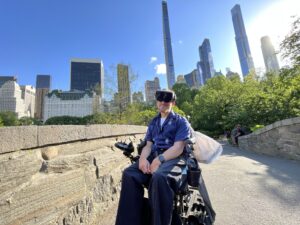
One that really stuck with me was the story of Chris Benedict, a DJ and disability advocate born with cerebral palsy who has consulted on Cognixion’s technology. He uses a heavy motorized wheelchair. He’s based near us in Santa Barbara. He’s been part of our community for a long time and he’s one of the people who has helped us shape Cognixion ONE.
We had an opportunity to go to New York for an accessibility event hosted by Verizon, and his dream had always been to visit NYC and eat a real New York–style pizza. Flying was going to be complicated, so his father offered to drive cross-country for a week-long road trip.
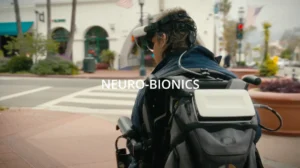
He took Cognixion ONE on the road with him. He was using it every day in the car, at stops along the way, communicating with his dad and talking with strangers who came up to ask about the headset. He used it in public, out in the world, not in a lab. At one point, he even took it onto an airboat in Florida on his return route home.
That experience really crystallized something for me. Assistive technology shouldn’t just work in controlled settings. It should work on Main Street. It should help people be out in the world, living their lives, having conversations, and doing what they want to do. That allowed Chris, to achieve a lifelong ambition he never thought would be possible.
That’s the future. That’s our North Star.
2026 AND THE DIRECTION OF NEUROTECH
Liz: It really is moments like that which truly are humbling and re-enforce the fire in your belly , when time are hard. Looking to the now and future Andreas, specifically this year, what developments feel most meaningful to you in terms of where Cognixion is heading?
Andreas: We may only be in February, but this year has been particularly meaningful because it’s about real-world clinical integration.
We launched a clinical study integrating our non-invasive BCI platform with spatial computing hardware, including Apple Vision Pro. That trial is focused on people with ALS, stroke, spinal cord injury, and traumatic brain injury, exploring communication and computer control without surgery. For us, that represents a convergence between neurotechnology and mainstream computing.
What we’re proving is that we can deliver reliable, high-speed, high-quality, portable brain measurement technology. This underlying engineering allows sophisticated application control for paralyzed users, but it can also be used more broadly as a closed-loop system for measurement to unlock numerous applications beyond assistive technology.
The same engineering that enables precise control for paralyzed users could open the door to applications in rehabilitation, cognitive training, clinical research, and beyond.
We’ve seen increasing ecosystem engagement. Our research platform, Axon-R, continues to expand into research institutions, and partnerships with companies like Blackrock Neurotech reinforce the idea that multimodal systems combining EEG, eye tracking, and other neural inputs represent the next frontier.
There has also been broader visibility. Coverage in outlets such as The Wall Street Journal and Wired has helped contextualize non-invasive BCI as part of a larger conversation about accessibility and the future of human-computer interaction. Historically, non-invasive neurotechnology has had a reputation for signal quality limitations, but Cognixion is raising the bar with medical-grade technology delivered in a consumer-ready form factor.
The role of AI is also significant in addressing the signal-to-noise challenge of recording from the scalp versus the cortical surface. Advanced models are making it possible to achieve near-equivalent performance for certain use cases. There are certainly applications that require cortical precision, but for many use cases, EEG combined with strong user experience design is sufficient.
This year feels like a translation phase, where the platform is being tested, integrated, and taken seriously by both clinical and technology communities. It’s also the first time we’ve heard investors explicitly state they are looking for neurotechnology with a path to mass-market access, which Cognixion is positioned to provide.
Liz: What will be the markers of success for you and your team in 2026? What would you like to reflect on when you reach 31st December 2026?
Andreas: Simple. I’d like us to achieve FDA clearance for Cognixion ONE and our assisted reality platform serving neurodegenerative and acquired conditions.
NEUROTECH TRENDS
Liz: What trends do you think we will see in neurotechnology this year?
Andreas: The FDA has begun embracing AI while also stepping back from oversight of wellness or informational devices that fall into the consumer wearables category. We will likely see more non-regulated devices and software entering the market that do not make medical claims but provide information consumers can use to support behavioral shifts and more informed discussions with healthcare professionals.
There will also be substantial progress in preclinical and clinical validation across neurotechnology. We may see hundreds of millions in fresh venture capital allocated to BCI and related fields in 2026. Neurotechnology is a frontier sector, and the range of use cases is broad.
According to the CDC, NIH and NINDS, there are over 400 diagnosable neurological disorders, yet relatively few have reliable, quantifiable assessments, diagnostics, therapies, or cures. The market for clinically validated software as a medical device application, (SAMD), will be significant.
Trillions of dollars are spent globally on neurological care, and trillions more are lost in productivity. We believe Cognixion can serve as an on-ramp not only for restoring population health, but also for contributing to broader economic productivity.
FUNDING TRENDS
Liz: What do you think funding trends will look like this year?
Andreas: I think we will see valuations increasing for both earlier-stage and late-stage companies.
There have not been many exits in neurotechnology, but we may see an uptick in M&A as AI companies seek device platforms that allow their models to become more integrated into daily life.
Wearables are likely to lead mass adoption of AI and neurotechnology.
Invasive neurotechnology will continue to attract significant funding and headlines. However, non-invasive technology is likely to capture a larger portion of the total addressable market, (TAM). There is room for both invasive and non-invasive technologies to coexist, given the personalization required in patient care. That said, non-invasive systems are likely to be the only viable option for widespread, chronic, sub chronic, short-term, and episodic use cases. These broader use cases will help bridge neurotechnology beyond assistive applications and into mainstream adoption.
COLLABORATION
Liz: I know you are a strong proponent of collaboration. How can we in the neurotech start-up world work better together and to what aim?
Andreas: By working more closely together, we can address larger challenges and present a stronger collective voice. We can reduce the complexity, cost, and operational burden of building, validating, and deploying innovative technologies.
Not every health problem requires a bespoke drug or device. Many conditions can be addressed by leveraging existing or emerging platforms to accelerate market and patient access while reducing development time and expense.
For example, it can cost between $25–50M to build and clear a Class I or Class II medical device. By contrast, it may cost approximately $5–10M to develop and clear a SaMD (Software as a Medical Device) or SiMD (Software in a Medical Device) application, provided the software runs on a cleared hardware platform.
From a systems perspective, this creates an opportunity to build validated applications on established infrastructure rather than repeatedly rebuilding hardware from scratch.
Liz: Thanks for you time Andreas and I’m sure we’ll be catching up again face to face in the not too distant future!
Do You Want to Be Featured?
If you enjoyed this post and would like to be featured within my Leader In The Spotlight NeuroTech, please reach out to me.
If you are a VC, FO, KOL, researcher, or clinician with a specialist interest in NeuroTech, I would also love to feature you.
Thank you – let’s work together to better understand the ultimate frontier- the brain.
About the author

Liz is our Principal Consultant at Cruxx, covering neurotechnology markets. She works globally in the MedTech space, building impactful teams and headhunting unique talent for start-ups pushing the frontiers of medical innovation and technology. From R&D, clinical and regulatory to C-suite and Board level, Liz is exceptional at sourcing visionary, talented individuals for our clients across Europe and the US.
More to explore