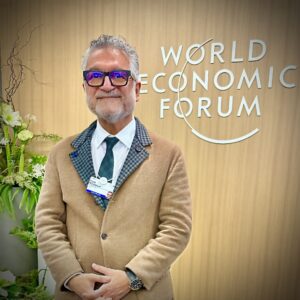
LEADER IN THE SPOTLIGHT – FRED KHOSRAVI, CHAIRMAN & CEO IMPERATIVE CARE, INVESTOR & MANAGING MEMBER, INCEPT LLC
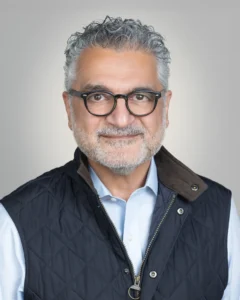
I count myself fortunate to know Fred Khosravi.
There are several CEOs I speak to regularly who are far more than the sum of their titles. They carry layer upon layer of depth, perspective, purpose and humanity. If their roles were taken away overnight, their message and what they stand for would endure.
It is not about the position. They are really humble individuals. They are passionate. It is a way of being.
David Veino, Bill Hunter, Carolina Aguilar, David Adair, Rotem Kopel, Franz Bozsak, Lisa Jacobs and several others come to mind. There are more of you than I can name here, leaders I genuinely respect from the bottom of my heart.
I caught up with Fred after a recent visit to Taiwan. The purpose was to reflect on what he and his companies stand for, but we did our usual, started at Point A and took a great tour which was so much richer than my original interview with him was going to be.
WHO IS FRED KHOSRAVI?
Fred would make an amazing dinner guest. Never a dull moment and so much to learn from him, not just Neuro but MedTech and life. None of it irrelevant or boring.
To many he needs little introduction, but I will share some topline details here to give context to the following discussion.
Fred is not just a CEO. He is a repeat category builder in medical devices. His career spans more than 30 years and several therapeutic waves: coronary, embolic protection, structural heart and neurovascular intervention.
He is a founder and a co-founder. He is a CEO and a Chairman, a strategic advisor and a capital architect via Incept LLC. He actively shapes culture and he never forgets why he is in this space. His North Star: the patient.
He hasn’t stayed in one lane.
He led the initial design and development team of the Multilink coronary stent at Guidant/ACS before building a career spanning embolic protection, structural heart and neurovascular intervention.
In 2015 he co-founded Imperative Care alongside the late neurovascular surgeon
L. Nelson Hopkins, where he serves as Chairman and CEO today. Through Imperative Care he is overseeing the Telos endovascular robotics platform, designed to bring thrombectomy treatment to more patients through greater precision and standardisation.
He is also Chairman of the Board of Kandu Inc., a company combining BCI technology with digital health services to set a new standard of care for stroke recovery. Beyond stroke, he chairs Tulavi Therapeutics in peripheral nerve surgery and sits on the board of Rejoni, a gynaecology-focused biomaterials company.
Through Incept LLC, the life sciences incubator he co-founded in 1998, with Amar Sawhney he has built a portfolio spanning 25 companies with 16 exits.
Notable among them: Embolic Protection Inc. acquired by Boston Scientific, AccessClosure acquired by Cardinal Health, and Claret Medical, which brought cerebral protection technology to structural heart intervention.
He was inducted into the National Academy of Engineering in 2024.
But that is what Fred does. Who Fred is, is much more.
He is funny, passionate, highly intelligent, deeply humble and he credits others around him with much success, his wife being the person he most strongly praises. He says she made him the man he is and she is the key person who helped him make the great decisions he took along the way.
I picked up with Fred, and we caught up after his early morning exercise routine.
His routine mirrors something we discussed in our conversation.
Standardise. Repeat. Scale. Success.
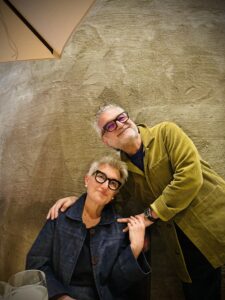
Liz: Fred, great to see you again. What is it about MedTech you find so fascinating that it has retained your passion for so many years?
Fred: I have dedicated my career to solving meaningful clinical challenges that have the potential to deliver real, measurable impact for patients and their families.
The opportunity to contribute to solutions that truly improve lives has always grounded me in my purpose. In some cases, we’re giving people back their lives.
Seeing that and the difference our work makes for patients every day continues to inspire and humble me as a human being and a leader in this industry.
And just as rewarding for me, is the chance to work alongside so many talented and mission-driven individuals who share a commitment to advancing patient care.
I learn as much from them, if not more, as they say they do from me. Medtech is such an exciting space to be in. I can’t imagine working in any other industry.
INVENTION IS NOT INNOVATION
Liz: I’m with you on that Fred. We are so lucky to work in it. It’s a truly fascinating space.
Touching on what you said about learning from others, I know several of the leaders at Incept whose lives and careers you’ve helped shape. I was speaking with Colby Holthouse, May Health recently, and she told me about the impact you’d had on her career.
Fred, I know innovation is something you are passionate about. Tell me in your words, how do you define innovation?
Fred: I make a very clear distinction between invention and innovation.
An invention is something technically clever and new, i.e. never been done before!
Innovation is when that invention becomes available broadly to as many people who need it and could live a better life as result of it.
I have been privileged to work on technologies that now reach millions of patients annually. That is when something becomes an innovation, when it moves beyond early adopters and becomes part of standard of care worldwide.
Across the platforms built through Incept, along with my Incept partner Dr. Amar Sawhney, products now touch roughly one and a half million patients annually. In essence. Innovation is when it is at scale. When it is reproducible and standardised.
In our business, at-scale patient impact must be the North Star.
Capital formation matters.
Returns matter.
But if what you build does not reach patients globally, then it has not completed the journey.
THE FILTER & LOSING SIGHT
Liz: I think there was a special moment during your recent travels to Taiwan that re-enforced that philosophy. I know you were deeply moved by that trip.
Fred: Yes. You’re right.
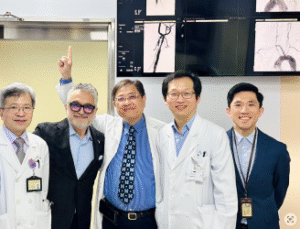
I visited the Veterans Hospital in Taipei. I walked into the Cath lab and there was a carotid procedure underway. I noticed a filter being used and recognised it immediately on the x-ray screen.
It was a technology we developed with an extraordinary team of engineers and the late Dr. Nick Hopkins, decades ago at Embolic Protection Inc., the FilterWire EZ platform, which remains a leader in distal protection, 25 years after Boston Scientific acquired the company.
I doubt that this carotid stent procedure was staged for me. It was serendipitous.
Here I am on the other side of the world, passing through, and observing a patient benefiting from something our team built 27 years earlier.
That is the difference between invention and innovation.
Which also means that while many inventions that become innovations start the journey, often in smaller start-ups, to scale and go global, most need to be acquired.
BIGGER THAN ROI
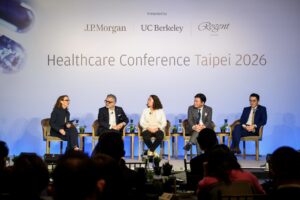
Fred: Two days later after I returned from Taiwan, with that moment still in my memory, I was sat on a panel where much of the discussion was focused on capital formation and return.
I understand that side of the business. I am responsible for returns myself.
I decided to take the opportunity and ask the audience: “Are we remembering that the purpose of all this capital formation, all this capital allocation, all this ROI talk, is to create technologies that actually treat patients globally?”
To me this is critical.
Because if the result is not a product that meaningfully improves care at scale, then you may have money in the bank, but you have not fulfilled the real mission.
Scaling medical innovations truly takes a village.
Physicians, care providers, innovators, entrepreneurs, scientists, investors, manufacturers, regulatory agencies, and global strategics. It takes true dedication and conviction from all of us. We must keep reminding ourselves why we are in this field.
The North Star. The reason we are all in this ultimately.
THE SECRET SAUCE
Liz: Going back Filterwire EZ – I know it is still the number one distal protection device 22 years after it was cleared by US FDA in 2004. Very impressive!
Tell me Fred, you mentioned learning from many of the people you surround yourself with. if I was to step into Imperative Care or any of the Incept LLC companies, what would I see with respect to culture?
Fred: At national sales meetings for Imperative Care, it is not uncommon for seasoned professionals to stand on stage and become emotional while talking about patients.
People here deeply believe in what we are doing. When you stay anchored to patient impact, it affects the culture. It affects how people show up.
For me, mission is not branding. It is operational fuel.
Liz: Tell me about Incept. What is it and what is its secret sauce?
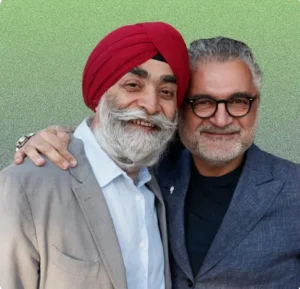
Fred: Incept is just me and my partner.
There are no employees. No officers. No phone number. It is patents and a bank account and two men.
We start our own companies with our own technologies. We seed ideas internally and we do a significant amount of work before something ever becomes a company.
The key is that we are disciplined enough to stop ideas early if they do not meet the bar -even if we are personally excited about them.
We challenge concepts hard at the front end.
If they do not stand up to scrutiny, we move on. Once something officially becomes a company, it has already been through heavy pressure testing.
That is why, over twenty-six years and twenty-seven companies, we have not had to shut a single one down.
Today, products that originated through Incept platforms touch roughly one and a half million patients annually worldwide. That is the metric that matters most to us.
Liz: So how does a concept survive Incept? What does it need to meet?
Fred: Over the years we have honed it. We operate on three principles.
First, it has to be a big impact technology. It must be capable of being number one or number two in a market for a long time. If it cannot realistically reach that position, it is probably not worth building.
Second, we prefer leadership in a defined space. I would rather own 50% of a $100M market than 5% of a billion dollar one. In one case, you are the leader. In the other, you are a small frog in a large pond. The numbers may look similar, but the strategic position is not.
Third, culture. We work with and hire good people. These businesses are hard. Life is too short to build them with people you do not want to be around.
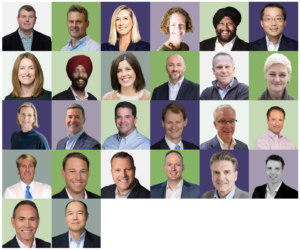
Leadership development is central.
In large organisations, leadership cultivation is structured. In our case, we send people out on a limb. They fall. They get hurt. We watch whether they dust themselves off and go back out again. The ones who go back out are the ones who can lead an entrepreneurial company.
Innovation and diversity are intertwined. Innovation also depends on the environment. I believe freedom is the petri dish for innovation. Organisations that encourage diverse perspectives and open thinking tend to produce more durable innovation.
Inside Incept, we value both inherent and acquired diversity because different viewpoints strengthen decision-making.
If significant patient need and impact remain the North Star, and you build within an environment that encourages free thinking and disciplined filtering of ideas, innovation becomes repeatable rather than accidental.
A PIVOTAL MOMENT IN NEURO
Liz: When we last spoke about what is happening currently in neuro, you suggested it is at a pivotal moment. Why?
Fred: Because the same pattern I have seen in cardiovascular and other categories is playing out again.
For example, stroke therapy today is still highly operator dependent. It can look like systems engineering next to the patient. Each physician has their own stack and approach. I respect that. It is often how innovation starts.
But therapies do not become truly global until they become standardised.
Today only less than one in ten eligible thrombectomy population receives treatment globally. That tells you two things.
There is potential for significant market opportunity and we still have a lot do to make this powerful treatment in medicine available to more patients.
If we want broader access, we need standardisation.
Standardisation enables reproducibility
Reproducibility enables scale
Scale enables better accessibility
This is also where robotics becomes relevant.
Robotics requires a defined, standardised procedural stack. It generally does not operate efficiently in a bespoke environment. If we want to expand stroke access geographically, and eventually enable remote capability, the foundation must be standardised.
The principle is not unique to neuro. But neuro is one of the areas where the next wave of standardisation could meaningfully expand global access.
Liz: I’m interested to understand your thoughts on where we may be going in neuro. Acute neuro intervention and chronic neuro recovery are very different worlds. Where do you believe the future of neurotech sits – intervention, rehabilitation, a convergence, elsewhere?
Fred: Stroke care has historically stopped at reperfusion. However, I believe recovery support is a critical factor when it comes to patients’ long-term outcomes and quality of life. Technology is enabling a continuum of neuro care that goes beyond acute treatment.
Digital health and advanced neurotech such as Brain-Computer Interface (BCI) is an exciting space to watch and I believe is poised to connect care across the entire patient journey.
Liz: And, in your opinion, what would it take to democratise neurotech beyond major academic centres? I don’t mean just stroke. All neuro.
Fred: To truly democratize neurotechnology, the next generation of devices must be designed with simplicity, speed, and usability at their core.
Advancing care beyond major academic centres requires systems that are intuitive for physicians, streamlined within clinical workflows, and capable of delivering predictable, high-quality outcomes.
Standardisation will be critical. When technologies are reliable and easier to adopt, more hospitals and care teams can confidently provide advanced neurointerventional care.
Equally important is the ability to extend expertise beyond geographic boundaries.
By integrating remote capabilities into these systems, we can enable experienced physicians to support and guide care in real time, helping bring advanced neurological treatment to more patients regardless of where they live.
Ultimately, democratising neurotechnology means expanding access, reducing variability in care, and ensuring that more patients benefit from timely, life-saving interventions.
Liz: Within stroke specifically, Fred, where do you see the standard of care shifting most significantly in the near term?
Fred: The field of ischemic stroke care has seen major advancements in recent years. Clinical data, including the results reported in our Imperative Trial of the Zoom System, have demonstrated favourable safety and efficacy with fast treatment times for an aspiration-first approach using mechanical thrombectomy.
I believe advanced technologies are improving outcomes, and growing attention to post-stroke recovery and long-term neurological health will only elevate the field – and patient outcomes – even further.
THE NORTH STAR
Liz: If there is one idea you want people to carry forward from this interview, what is it?
Fred: Patient impact at scale is the point.
If that remains the North Star, the rest aligns. Evidence aligns. Returns align. Culture aligns.
If we lose that, we may still build companies. But we will not build global therapies.
FOOTNOTE
Three weeks after we spoke, Imperative Care closed an oversubscribed $100 million financing round, with proceeds earmarked for the continued commercialisation of its thrombectomy portfolios and the development of the Telos robotic platform, the technology Fred believes will bring treatment to the many patients who currently cannot access it.
Less than one in ten eligible patients globally receives thrombectomy today.
That is the gap Fred is building towards. Not the valuation. Not the return. The patient who does not get treated because the right physician is not in the right place at the right time.
Patient impact at scale is the point.
He meant it.
REFLECTIONS
Fred does not speak in abstractions. He speaks in patients. A filter in Taipei. One and a half million people a year. The late Dr. Nick Hopkins and a team of engineers who built something that outlasted all of them – can we say – that still is a lead product 22 years later!
The thing that stays with me from this conversation is not the scale of what Incept has achieved, though that is genuinely remarkable.
It is the discipline. The willingness to kill an idea you love because it does not meet the bar.
The insistence that innovation is not a moment of invention but a long, hard, collective act of getting something to the people who need it.
Fred has spent over 30 years proving that conviction is a business model.
Thanks Fred for such a great discussion and I look forward to catching up with you shortly in the not too distant future.
Do You Want to Be Featured?
If you are a CEO or Co-Founder and would like to be featured within my Leader In The Neurotech Spotlight, please reach out to me.
Are you a VC, FO, KOL, researcher, or clinician with a specialist interest in Neurotech – then please also get in touch, as I want to have a well-rounded perspective.
Thank you.
Understanding The Brain-The Ultimate Frontier.
About the author
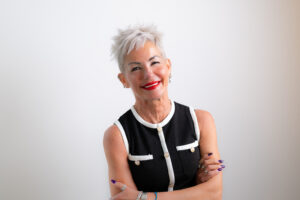
Liz is our Principal Consultant at Cruxx, covering neurotechnology markets. She is a very well liked, inisghtful, highly connected and respected, champion of start-ups and the people within them. She is unique.
Passionate and energetic, she is driven by finding the best talent today, for the healthcare technology of tomorrow.
She works globally, building impactful teams and headhunting unique talent for start-ups and VCs pushing the frontiers of medical innovation and technology.
If you are growing your team reach out. She specialises in trans-atlantic team builds, USA, Europe and wider.
From R&D, clinical and regulatory to C-suite and Board level, Liz is exceptional and relentless at sourcing visionary, talented individuals for our clients.