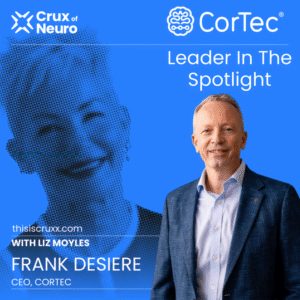
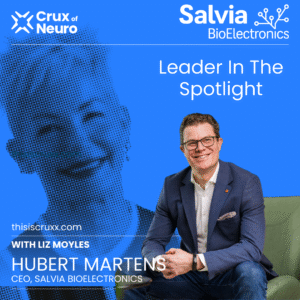
LEADER IN THE SPOTLIGHT: HUBERT MARTENS
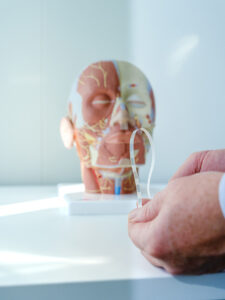
CEO: SALVIA BIOELECTRONICS
Hubert Martens, CEO of Salvia BioElectronics, is one of those rare founder-operators with a long track record in neuromodulation and implantable devices. He’s a great guy: unassuming, smiling, extremely intelligent, and genuinely passionate about his mission at Salvia (more to come).
A physicist by training, Hubert began his career at Philips in R&D before moving into neuromodulation. He later co-founded Sapiens Steering Brain Stimulation (DBS technology for neurological conditions), which was acquired by Medtronic in 2014 for approximately $200M. After supporting the transition and integration at Medtronic, and bitten by the start-up bug, he co-founded both Sirius Medical and Salvia BioElectronics in 2017, playing an active part in both. He stepped away from Sirius around 2020 to lead Salvia full time as CEO. That same year, Salvia received FDA Breakthrough Device Designation for chronic migraine. The company is now Series B stage.
Reclaiming Your Life: Not Just a Bad Headache
Hubert explained that Salvia’s mission is empowering people with migraine to reclaim their lives with a minimally invasive, drug-free bioelectronic approach.
Migraine is often dismissed as a “bad headache.” It isn’t. It can be profoundly debilitating. It affects working-age adults disproportionately, with women impacted at higher rates than men. Classed as a leading cause of disability worldwide, migraine also carries a major economic cost. In the US alone, it is estimated employers lose $19.3B per year due to missed workdays tied to migraine. And despite the range of available drug therapies, many patients still fail to achieve durable control.
Addressing the $19.3B Problem
Salvia’s lead program, MySalvia Therapy, targets adults with high-burden, disabling chronic migraine, particularly patients who continue to experience frequent migraine days despite standard preventive and acute medications and who are seeking a clinician-managed, non-pharmacologic option. Cluster headache has also been referenced as a potential future indication.
MySalvia is a minimally invasive, personalised implantable neuromodulation system designed to modulate migraine-related pain signalling. It uses ultra-thin leads placed subcutaneously in the forehead and back of the head to stimulate key sensory nerves, including the supraorbital and greater occipital nerves. It is an open-loop system that is patient-activated and clinician-programmed.
The company is currently running RECLAIM, a multi-center, double-blind, sham-controlled study, if timelines hold Salvia should know whether it has met the trial’s primary safety and efficacy endpoints soon. FDA Breakthrough Device Designation also enables prioritized engagement with the agency as the program advances.
Loyal Investor Support
Salvia BioElectronics’ early investors included BOM Brabant Ventures and Thuja Capital at seed stage. The company’s €26M Series A (2020) was led by Panakès Partners, INKEF Capital, and SHS with participation from Dolby Family Ventures. Its $60M Series B (2025) was led by Innovation Industries with participation from Invest-NL and the EIC Fund, alongside continued support from earlier backers.
The investor syndicate clearly signals strong conviction in both Hubert and the MySalvia approach.
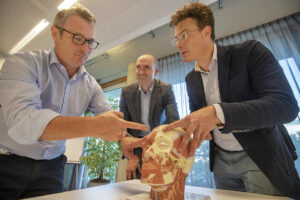
A COFFEE WITH HUBERT
Earlier in January, I sat with Hubert and enjoyed the virtual views of Eindhoven from his office in the Netherlands at Salvia BioElectronics HQ. Over a coffee, we spoke and I took the opportunity to ask him a few questions about how he defines success for himself and the team, how he sees the MedTech landscape evolving, and why execution and collaboration will define the next phase of neuro innovation.
Liz: Hi Hubert, great to see you again. We’ve just entered 2026. What will be the markers of success for you and your team this year, and what would you like to have achieved by 31st December 2026?
Hubert: Great to see you too, Liz. It’s always good over the Christmas break to reflect on what we have achieved and what lies ahead. Our focus is to deliver the best possible neuromodulation solutions for primary headache disorders. We have been granted FDA Breakthrough Device Designation for our Neuromodulation system, and have already commenced the RECLAIM clinical trial of MySalvia Therapy.
I’d love to see our clinical program running full steam ahead and evidence building up. At the end of 2026, these programs will have deepened our understanding of this new therapy modality, both in terms of science and clinical adoption pathways.
As we prepare for market access in the coming years, we’re expanding our team in the EU and US. We have a strong network and bring a compelling vision for the future of neurotech that resonates well.
At the end of this year, I’d love to look back and be proud of the amazing global team and partnerships we’ve built around this.
Liz: I hope so too. Zooming out a little, what trends do you anticipate shaping MedTech in 2026?
Hubert: Although I don’t expect to see very many concrete results in 2026, I firmly believe Europe will slowly work towards becoming a more attractive market for MedTech innovation.
Inspired by the positive examples that have been set in the USA (e.g. FDA Breakthrough Device Designation, early reimbursement coverage programs), we’re seeing steps towards reducing MDR burden for lower-risk devices, breakthrough device regulatory guidance, and pockets of commercial opportunities across EU markets.
We’re still very far from a strong EU-wide MedTech market, but I am encouraged by these positive trends that are important to me both as an entrepreneur and as a potential patient looking for the best possible care.
As consumer technologies have become an integral part of daily lives, public acceptance of novel neurotechnologies continues to rise cautiously, fueled by healthy debate on potential benefits versus risks and ethical considerations.
The neurotech field has continued to attract strong investments, in a significant part in response to the promise of the emerging field of BCI. As more human data are generated in 2026 and the years beyond, demonstrating safety, performance and efficacy of various neurotechnologies, the markets and public acceptance will be shaped around that reality.
Liz: That optimism about Europe’s regulatory direction and growing public acceptance naturally raises the next question: if the operating environment is improving, how does that change investor behavior and capital formation in neurotech and MedTech over the next 12 to 24 months?
Hubert: I think there will be further (albeit modest) recovery of venture funding for MedTech start-ups as the IPO window has opened somewhat, and M&A activity has increased. Still, securing funding will remain tough for start-ups in the MedTech space. I believe the trend towards fewer, but bigger, rounds will continue as investors are placing bets on a smaller set of opportunities with the most favorable risk/return profiles.
Early-stage funding for capital-intensive MedTech startups with long time-to-market and exit (greater than 7 to 10 years) will remain difficult, as typical fund lifecycles do not align well with these dynamics of MedTech value creation.
Liz: If capital is increasingly concentrated and early-stage timelines don’t fit standard venture cycles, then the challenge is bigger than any one company. How can we work together across the MedTech start-up ecosystem to overcome these shared barriers?
Hubert: The common challenge in MedTech is the commercial barrier for novel technologies. As an industry, we can raise awareness around this issue and argue how it is negatively impacting healthcare innovation and access to better therapies.
Liz: That point is the one I hear most consistently from founders, investors, and operators across the sector. In MedTech, innovation doesn’t end at clinical evidence. The real test is whether healthcare systems can adopt, reimburse, and scale new therapies in a way that rewards risk-taking and ultimately improves patient outcomes.
Hubert, thank you for the time and the candor. I’ll be watching Salvia’s progress closely through 2026, and I’m looking forward to continuing this series with more CEOs and Founders working at the edge of neuro innovation.
If you are leading a Neuro startup and would like to be featured, please reach out.
About the author
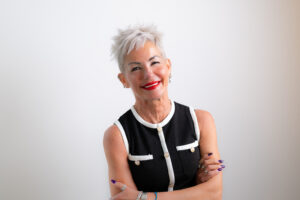
Liz is our Principal Consultant at Cruxx, covering neurotechnology markets. She works globally in the MedTech space, building impactful teams and headhunting unique talent for start-ups pushing the frontiers of medical innovation and technology. From R&D, clinical and regulatory to C-suite and Board level, Liz is exceptional at sourcing visionary, talented individuals for our clients across Europe and the US.
More to explore